
Lucio Blanco Pitlo III, President of Philippine Association for Chinese Studies, and Research Fellow at Asia-Pacific Pathways to Progress Foundation
Jun 05, 2026
For the second consecutive year, ASEAN stakeholders prefer China over the United States as a strategic partner, driven by China's dominant economic presence, infrastructure investments, and growing trust. U.S. standing has eroded due to policy unpredictability under the Trump administration, climate withdrawal, and declining reliability as a partner.

Dan Steinbock, Founder, Difference Group
Jun 05, 2026
The lingering energy shock is morphing from the Asian epicenter to a global economic drag. The U.S./Israel war imposes a fatal penalty on global growth.
He Weiwen, Senior Fellow, Center for China and Globalization, CCG
May 27, 2026
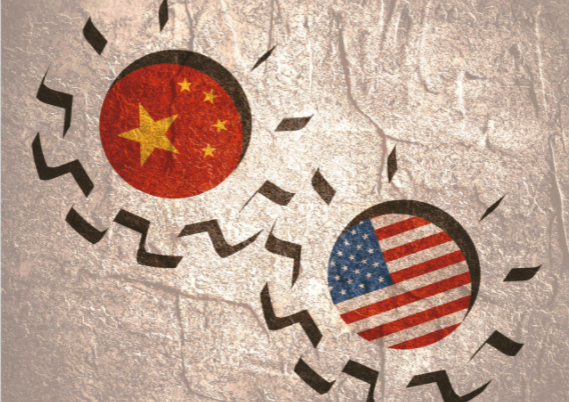
Trump’s trip to China signals the start of a new trade relationship, anchored in good economic fundamentals that are solid, stable and sustainable. Both countries stand to benefit, as does the rest of the world in terms of peace and prosperity.

Shang-Jin Wei, Professor, Finance and Economics at Columbia University
May 22, 2026
The optics of this week’s summit between Donald Trump and Xi Jinping were carefully staged to signal parity between the United States and China. Trump, the first US president to visit mainland China in nearly a decade, was accompanied by an entourage of American CEOs—including Tesla’s Elon Musk (with his son X), Apple’s Tim Cook, Boeing’s Kelly Ortberg, and Nvidia’s Jensen Huang—whose businesses rely on maintaining good relations with the People’s Republic. They were duly given a grand welcome in the Great Hall of the People.

Dan Steinbock, Founder, Difference Group
May 15, 2026
The U.S./Iran-linked energy crisis has shifted from a commodity shock to structural geopolitics, with Asia at the epicenter due to its dependence on imported oil and LNG. Global reverberations can no longer be avoided.

Han Liqun, Researcher, China Institutes of Contemporary International Relations
May 08, 2026
The announcement by the United Arab Emirates that it would withdraw from OPEC has drawn intense international attention. Should conditions in the Strait of Hormuz improve, the UAE would be well positioned to rapidly expand its share of the global oil market.

Christopher A. McNally, Professor of Political Economy, Chaminade University
May 08, 2026
The Strait of Hormuz crisis is driving a new era of geoeconomics shaped by national security, trade disruption, and coercive power. The resulting energy shock is accelerating the global shift toward green energy and increasing China’s influence in the emerging economic order.

Zhou Xiaoming, Former Deputy Permanent Representative of China’s Mission to the UN Office in Geneva
May 04, 2026
The European Union’s China policy is trapped in a glaring contradiction. Officially, Brussels frames China as a “partner, competitor and systemic rival.” In practice, however, the rivalry narrative has overridden all other dimensions and eroding the foundation of cooperation.

Sebastian Contin Trillo-Figueroa, Geopolitics Analyst in EU-Asia Relations and AsiaGlobal Fellow, The University of Hong Kong
Apr 21, 2026
Trump’s tariffs failed to reshore manufacturing or reduce trade deficits, instead weakening U.S. alliances and strengthening China’s global position. They accelerated a shift in power toward control of supply chains and critical materials—an area where China holds a decisive advantage.

Lucio Blanco Pitlo III, President of Philippine Association for Chinese Studies, and Research Fellow at Asia-Pacific Pathways to Progress Foundation
Apr 21, 2026
A global energy crisis has created an opportunity for the Philippines and China to improve relations through increased diplomatic engagement, expanded economic cooperation, and renewed focus on energy security despite ongoing maritime disputes. China’s ability to supply fuel, invest in infrastructure, and support renewable energy development positions it as a key partner in strengthening the Philippines’ energy resilience and economic stability.
Back to Top

- China-US Focus builds trust and understanding between the U.S. and China through open dialogue among thought leaders.